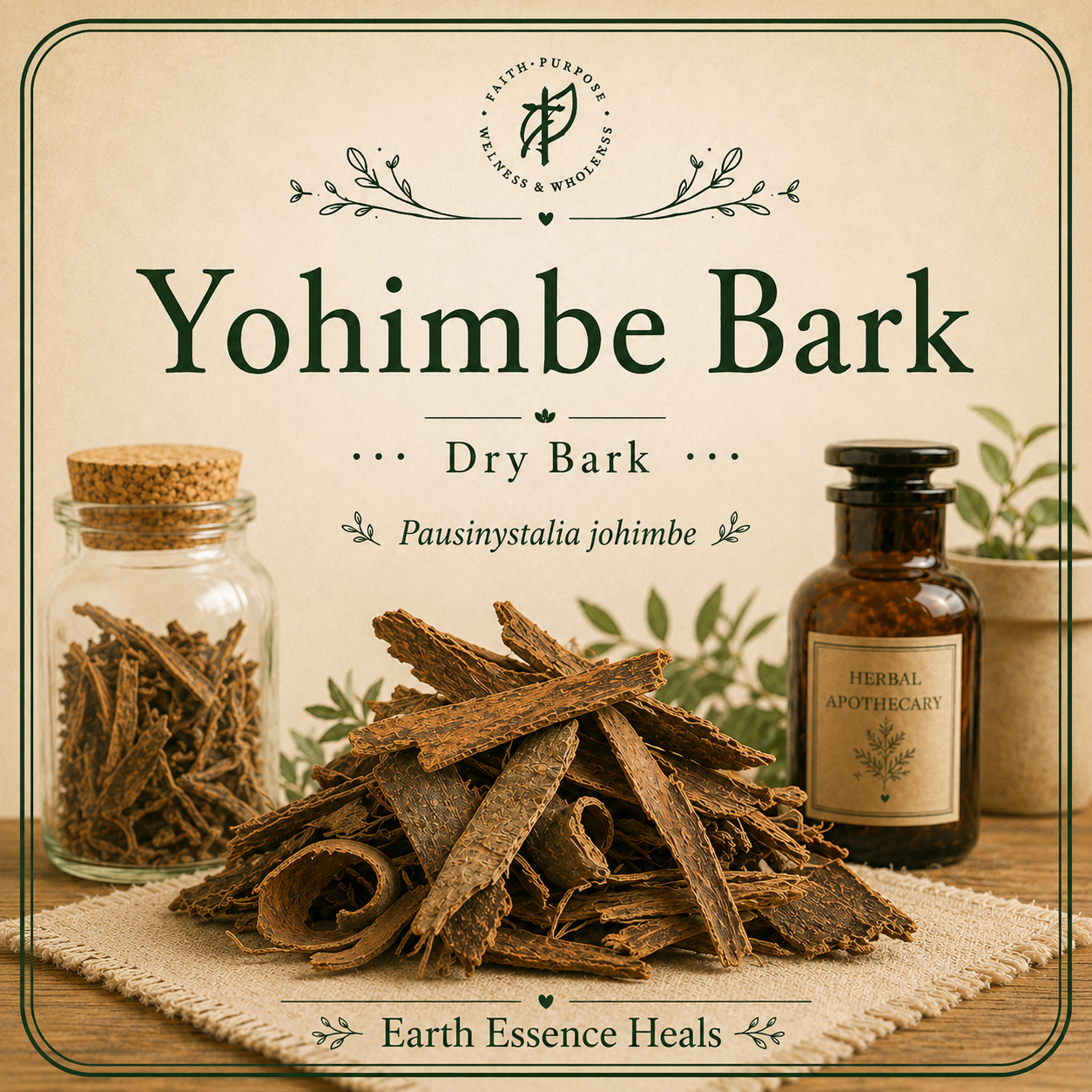
Yohimbe Bark, Dried - 1 ounce
Yohimbe Bark — Traditional Support for Vitality, Circulation, and Stimulation
Yohimbe bark is a strong traditional bark herb from the African tree Pausinystalia johimbe, historically used to support male vitality, sexual wellness, circulation, stamina, and stimulation. Unlike gentle nutritive herbs, yohimbe is a potent stimulating bark and should be treated with much more caution than everyday tea herbs.
Yohimbe is best thought of as a hot, stimulating, adrenergic herb, not a daily tonic. Its best-known active compound, yohimbine, can affect blood pressure, heart rhythm, anxiety, and nervous-system stimulation. Serious reactions have been reported, including blood pressure problems, irregular heartbeat, heart attack, and seizures.
Traditional Uses
Yohimbe bark has traditionally been used to support:
Male vitality
Sexual performance support
Circulation and blood flow
Stamina and physical drive
Energy and stimulation
Libido support
Erectile function support
“Cold,” sluggish, or low-drive patterns in traditional use
In the home apothecary, yohimbe should be considered a restricted, caution-heavy herb, not a casual shelf item.
Vitality, Circulation, and Stimulation Support
Yohimbe is often discussed because of its effect on adrenergic signaling, especially through yohimbine’s activity as an alpha-2 adrenergic receptor antagonist. In plain language, it can increase nervous-system stimulation and may increase blood flow in certain tissues.
That stimulating effect is also why it can be risky. Yohimbe may worsen anxiety, panic, high blood pressure, rapid heart rate, insomnia, and heart rhythm problems. It should not be combined casually with caffeine, stimulant herbs, decongestants, diet pills, or medications that affect mood, blood pressure, heart rhythm, or sexual function.
Preparations
Tea or decoction: Yohimbe bark is traditionally prepared as a decoction because it is a bark. However, because of potency and safety concerns, casual home decoction is not recommended.
Tincture/extract: Commercial extracts may be stronger and more concentrated than tea. Product strength can vary significantly, and labeling may not always reflect the true amount of yohimbine. NCCIH notes that inaccurate labeling is a concern with yohimbe supplements.
Capsules/tablets: Yohimbine has also been used in standardized forms, but this should be clinician-guided because adverse effects and drug interactions can be serious.
Blend caution: Avoid combining yohimbe with stimulant herbs or products such as caffeine, guarana, ephedra-like products, bitter orange/synephrine, high-dose green tea extract, pre-workout formulas, or decongestants.
Active Compounds
Yohimbine: The primary indole alkaloid associated with yohimbe’s effects. It acts on adrenergic receptors and is responsible for much of yohimbe’s stimulating, circulation-related, and sexual-function reputation.
Rauwolscine and related alkaloids: Related stimulant alkaloids that may contribute to cardiovascular and nervous-system effects.
Tannins: Astringent bark compounds that may contribute to the bitter, drying nature of the herb.
Bark polyphenols: Plant compounds that occur naturally in the bark, though yohimbe’s strongest known effects are primarily tied to its alkaloid content.
Indications
Yohimbe bark may be considered only with caution for traditional support of:
Male vitality
Low libido patterns
Sexual performance support
Erectile-function support
Circulation support in specific traditional-use contexts
Stimulation and drive in cold, sluggish, depleted patterns
For Earth Essence shelf language, I would keep yohimbe in a “Use With Caution / Practitioner Guidance” category rather than presenting it as a routine wellness herb.
Contraindications and Cautions
Avoid yohimbe or use only under qualified clinical supervision in the following situations:
High blood pressure
Low blood pressure or unstable blood pressure
Heart disease
Chest pain or angina
Irregular heartbeat or arrhythmia
History of heart attack or stroke
Anxiety, panic attacks, PTSD, bipolar disorder, psychosis, or severe depression
Seizure disorder
Parkinson’s disease
Kidney disease
Liver disease
Thyroid disease
Stomach ulcers or inflammatory digestive conditions
Prostate or genital inflammatory conditions
Pregnancy or breastfeeding
Children or teens
Older adults with cardiovascular risk
Before surgery
Use of antidepressants, especially MAOIs, SSRIs, SNRIs, tricyclics, or other psychiatric medications
Use of stimulants, ADHD medications, decongestants, diet aids, pre-workout products, or high caffeine intake
Use of blood pressure medications, heart rhythm medications, nitrates, erectile dysfunction medications, or multiple prescriptions
Memorial Sloan Kettering warns against use in people with high blood pressure, heart disease, arrhythmias, seizure disorders, kidney, thyroid, liver, psychiatric, ulcer, and several other conditions, and notes serious potential drug interactions.
Use Under Supervision
Use yohimbe bark only under the supervision of a qualified healthcare professional or knowledgeable herbal practitioner, especially with heart disease, blood pressure issues, anxiety, panic, psychiatric history, thyroid disease, kidney disease, liver disease, seizure risk, sexual-performance medications, stimulant use, or prescription medications.
This is not an herb I would recommend for unsupervised use in a “When There Is No Doctor” setting unless the person already has professional guidance and understands the risks.
Red Flags
Seek medical care immediately for chest pain, severe headache, pounding heartbeat, irregular heartbeat, fainting, severe anxiety or panic, confusion, hallucinations, seizure, severe dizziness, dangerously high blood pressure, shortness of breath, one-sided weakness, severe agitation, or symptoms that worsen after taking yohimbe.
Earth Essence Closing
Yohimbe bark belongs in the apothecary as a strong traditional vitality and circulation herb, but it is not gentle and should not be treated like an everyday tea. It requires honest cautions, careful screening, and respect for its stimulating effects. For most people, safer herbs for stress, vitality, and circulation should be considered first.
