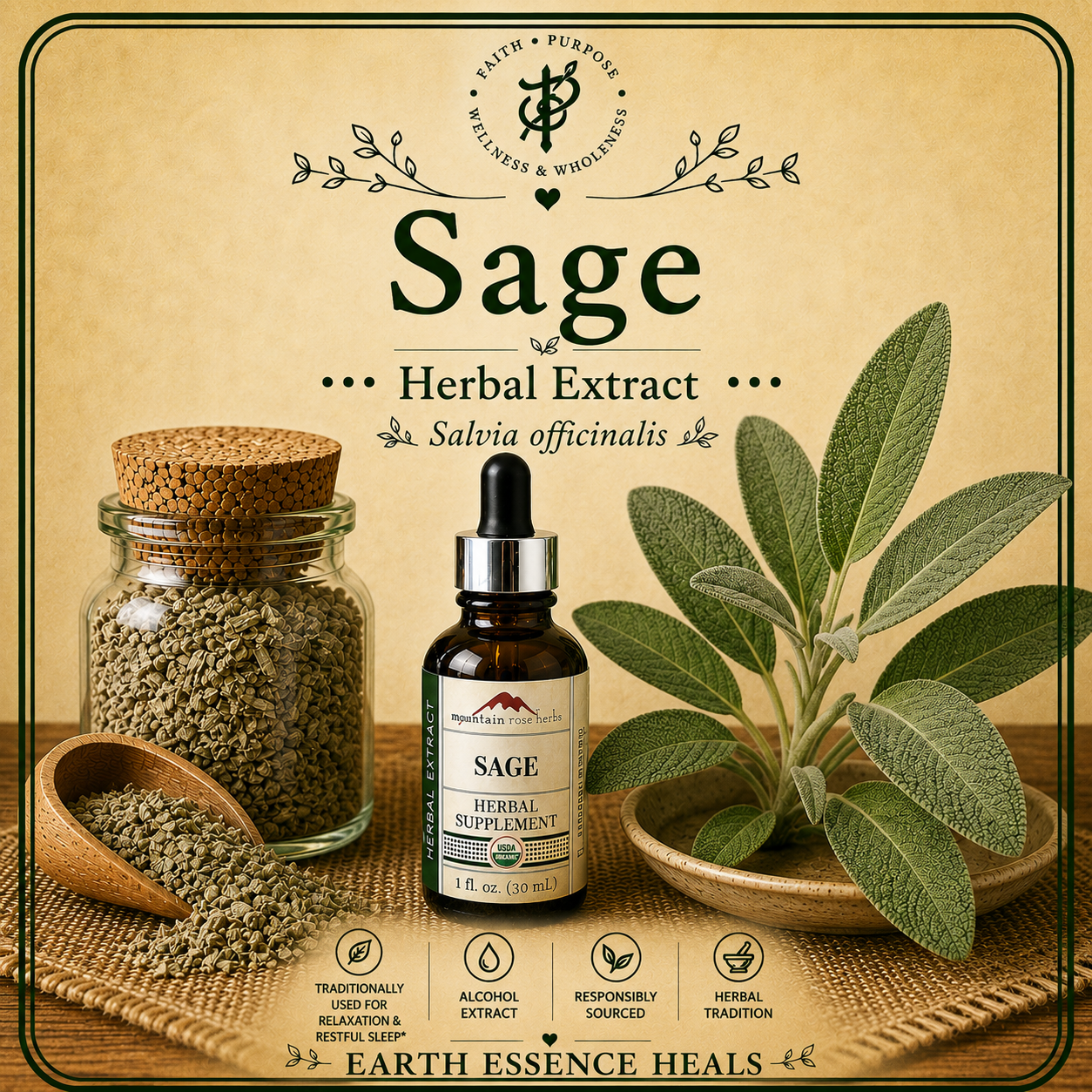
Sage Extract
Sage extract is a classic kitchen and apothecary herb with a long history in European, Mediterranean, and folk medicine. Traditionally used to support sore throat comfort, oral health, digestion, excessive sweating, hot flashes, and mental clarity, sage is one of those practical herbs that bridges the gap between food and medicine. For a “When There Is No Doctor” home toolkit, sage belongs in the category of strong, useful herbs that can support the mouth, throat, digestion, and body balance when used wisely 🌿
Sage extract is commonly taken in small amounts diluted in water, tea, or juice. Traditionally, sage has also been used as a gargle or rinse for throat and mouth comfort when properly diluted. In herbal practice, it may pair well with herbs such as thyme, echinacea, calendula, chamomile, yarrow, peppermint, or wild cherry bark depending on whether the focus is throat, digestion, immune-season support, or tissue tone. Sage is aromatic, drying, and astringent, so it is often best suited for damp, irritated, or overly secretive tissue states rather than dry, depleted conditions.
The primary active constituents in common sage include rosmarinic acid, flavonoids, tannins, and essential oil compounds such as 1,8-cineole, camphor, and thujone. Rosmarinic acid and flavonoids help explain its traditional use for inflammation and antioxidant support, while tannins contribute to its drying and tissue-toning effect. The essential oil fraction gives sage its strong aromatic character, but it is also why sage should be respected and not overused. NCCIH notes that common sage contains thujone, which can be toxic in large amounts or with prolonged high-dose use.
Sage is generally safe in normal culinary amounts, but concentrated extract should be used with more caution. It should be avoided in pregnancy, and safety during breastfeeding is not well established; sage is also traditionally used to reduce milk flow, so nursing mothers should be especially cautious. People with a seizure disorder, significant liver disease, hormone-sensitive conditions, or those taking sedatives, diabetes medications, seizure medications, or multiple prescriptions should speak with a healthcare professional before using sage internally. Avoid high doses and long-term continuous use because of the thujone content; NCCIH specifically warns that sage may be unsafe in high doses or when used for long periods.
At Earth Essence Health and Wellness, I use Mountain Rose Herbs sage extract because sage is an herb where quality and proper sourcing matter. I trust Mountain Rose Herbs for clean, consistent preparations, and this is the kind of traditional extract I feel comfortable keeping in the apothecary for careful, practical home wellness education.
